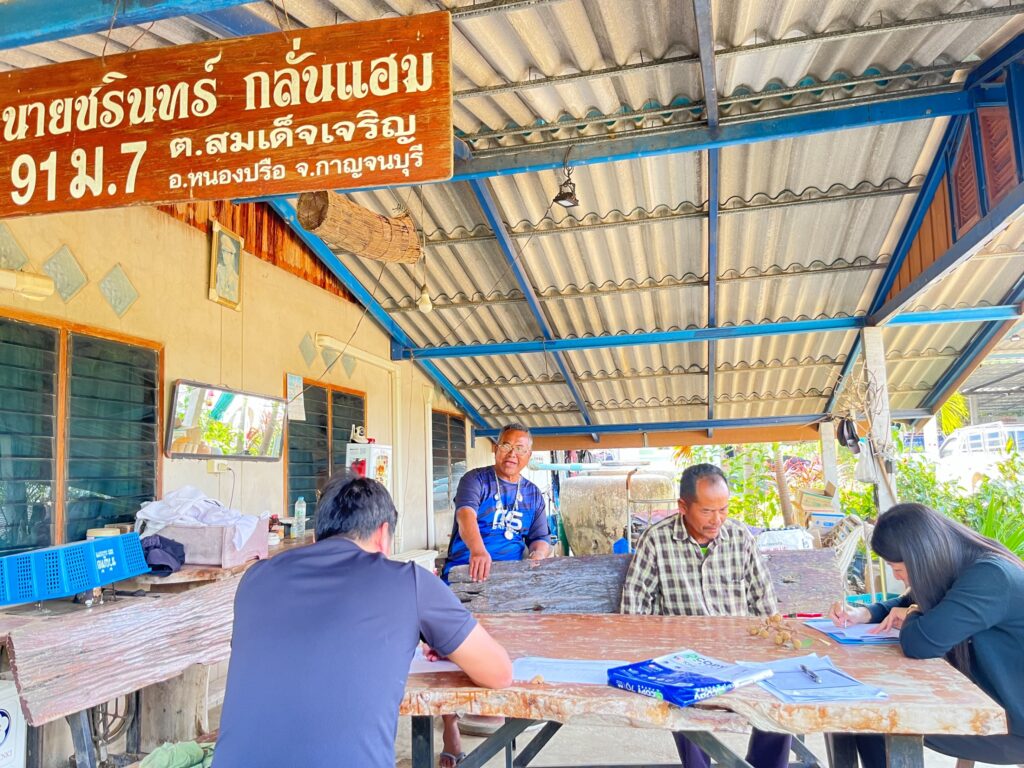
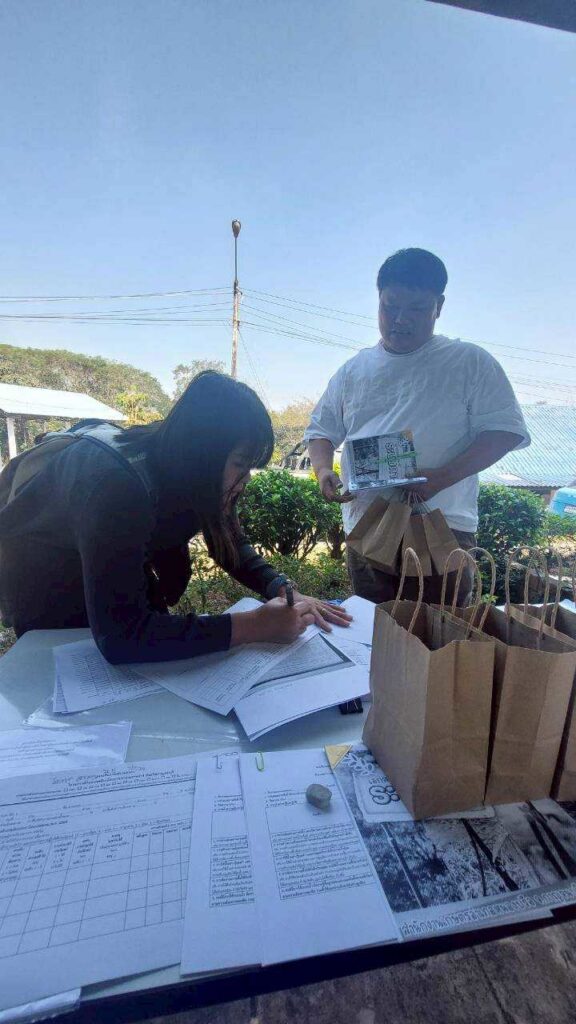
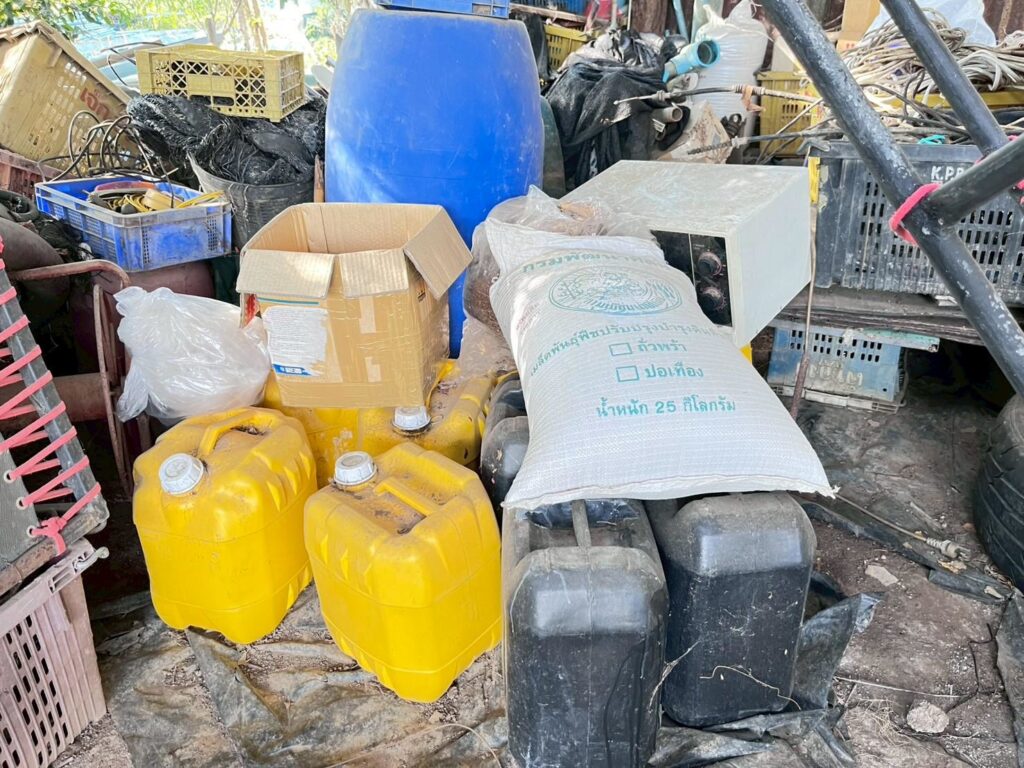
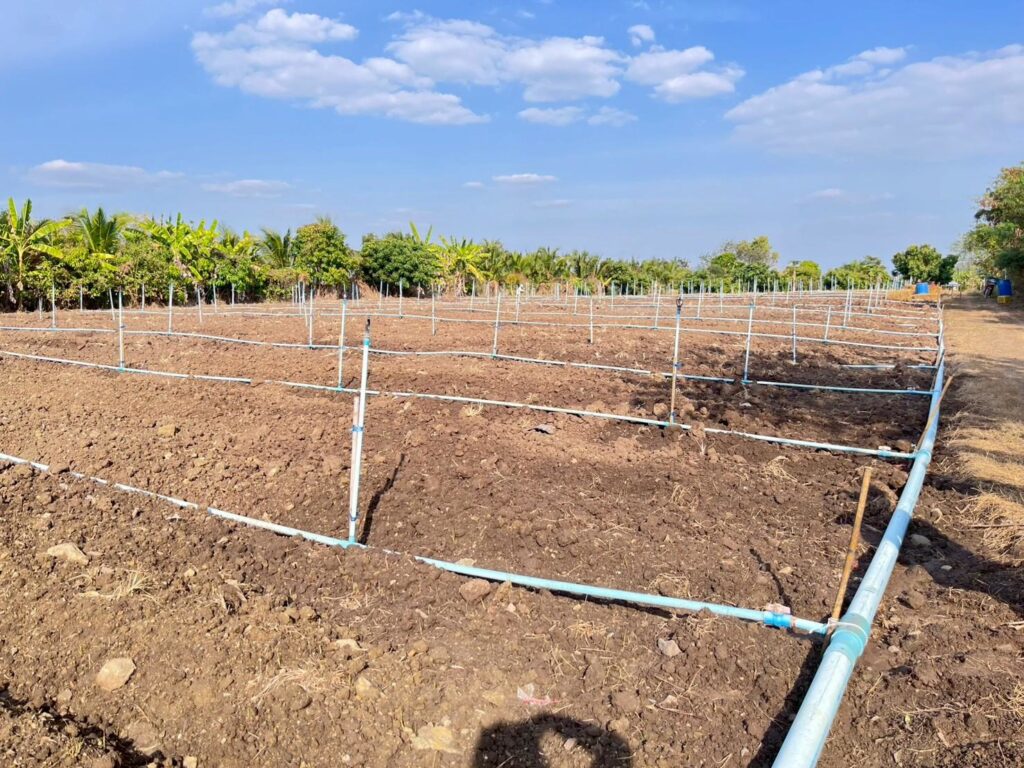
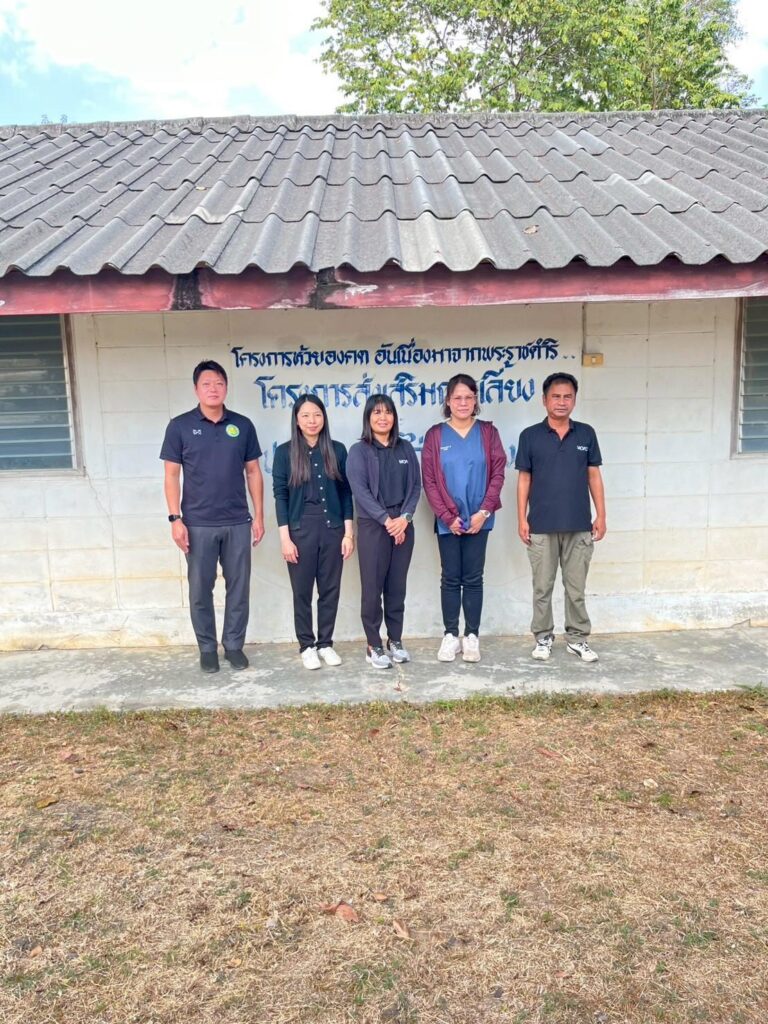
เมื่อวันที่ 28 – 30 มกราคม 2569 และวันที่ 3 – 5 กุมภาพันธ์ 2569 นายกิจษารธ อ้นเงินทยากร ผู้อำนวยการสำนักงานเศรษฐกิจการเกษตรที่ 10 จังหวัดราชบุรี มอบหมายให้เจ้าหน้าที่ส่วนวิจัยและประเมินผล ลงพื้นที่ติดตามประเมินผลการดำเนินงานโครงการห้วยองคตอันเนื่องมาจากพระราชดำริ ตำบลสมเด็จเจริญ อำเภอหนองปรือ จังหวัดกาญจนบุรี ประจำปีงบประมาณ พ.ศ.2569 ซึ่งเกษตรกรภายใต้โครงการห้วยองคตอันเนื่องมาจากพระราชดำริได้รับการสนับสนุนปัจจัยและองค์ความรู้ด้านการเกษตร อาทิ ส่งเสริมการผลิตปุ๋ยอินทรีย์คุณภาพสูง การใช้ปุ๋ยพืชสด การส่งเสริมการใช้น้ำหมักชีวภาพพร้อมสนับสนุนปัจจัย การใช้ไตรโคเดอร์มาควบคุมโรค
ลำต้นไหม้ในหน่อไม้ฝรั่ง การถ่ายทอดความรู้และเทคโนโลยีด้านประมงเพื่อส่งเสริมและพัฒนาอาชีพการเพาะเลี้ยงสัตว์น้ำแบบผสมผสาน ส่งเสริมการเลี้ยงไก่ไข่เพื่อบริโภคในครัวเรือน และการส่งเสริมความรู้ด้านการใช้น้ำอย่างรู้คุณค่า ส่งผลให้เกษตรกรมีองค์ความรู้เพิ่มขึ้นและสามารถนำไปปรับใช้ในพื้นที่ทำการเกษตรตนเองอย่างได้ผล
The Office of Agricultural Economics Region10, Ratchaburi, conducted monitoring and evaluation of the implementation of the Huai Ongkot Royal Initiative Project in Kanchanaburi Province for Fiscal Year B.E. 2569 (2026).
During 28–30 January 2026 and 3–5 February 2026, Mr. Kijsart Onngernthayakorn, Director of the Office of Agricultural Economics Region 10, Ratchaburi Province, assigned officers from the Research and Evaluation Division to conduct field monitoring and evaluation of the implementation of the Huai Ongkot Royal Initiative Project at Somdet Charoen Subdistrict, Nong Prue District, Kanchanaburi Province, for Fiscal Year B.E. 2569 (2026). Farmers participating in the Huai Ongkot Royal Initiative Project received support in terms of agricultural inputs and knowledge, including the promotion of high-quality organic fertilizer production, the use of green manure, the promotion and provision of inputs for bio-fermented water, and the use of Trichoderma to control stem blight disease in asparagus. In addition, knowledge and technology transfer in fisheries was provided to promote and develop integrated aquaculture livelihoods, along with the promotion of household egg-laying chicken farming and the dissemination of knowledge on efficient and sustainable water use. As a result, farmers gained increased knowledge and were able to effectively apply it to their own agricultural practices.”